PROMPT
PROMPT Therapy
A certified PROMPT clinician uses a holistic assessment to understand and analyse the
interaction between an individual’s Physical-Sensory Domain, Cognitive-Linguistic
Domain, and Social-Emotional Domain. This process is essential in identifying areas of
strength and need, allowing therapy to be carefully planned and highly individualised.
By developing weaker areas through structured activities, play, and purposeful routines,
therapy helps each child access their most effective communicative potential.
A PROMPT therapist therefore works across all three domains from a motor-speech
perspective, supporting speech, language, regulation, and functional communication in an
integrated way.
PROMPT Philosophy and Approach
PROMPT was developed by Deborah Hayden, Speech and Language Therapist, whose
work has transformed the practice of therapists worldwide and supported the communication
development of countless children and adults.
The PROMPT philosophy is unique because all clinical decisions are guided by the
Conceptual Framework, grounded in Dynamic Systems Theory. This framework enables
therapists to complete truly holistic and detailed assessments, before designing focused,
functional, and effective therapy programmes.
PROMPT clinicians work dynamically to improve the integration of speech, language, and
social communication skills where challenges exist in one or more of these areas, helping the
individual reach their full communicative potential.
For further information, please visit the PROMPT Institute.
PROMPT Technique
PROMPT stands for Prompts for Restructuring Oral Muscular Phonetic Targets.
A PROMPT clinician carries out a detailed assessment of an individual’s motor-speech skills
to identify where the speech system requires support, development, or retraining.
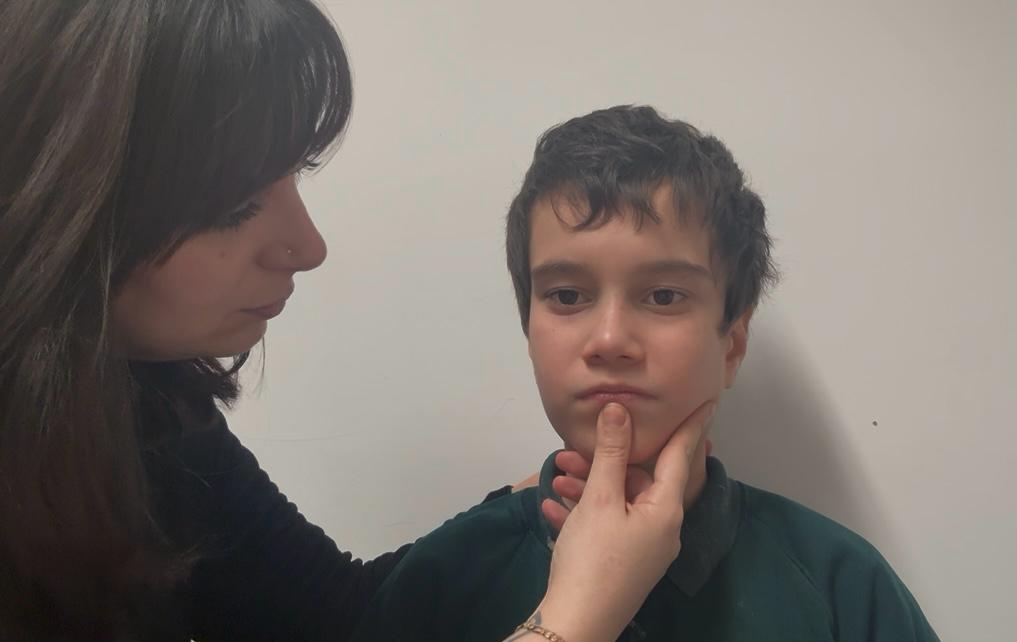
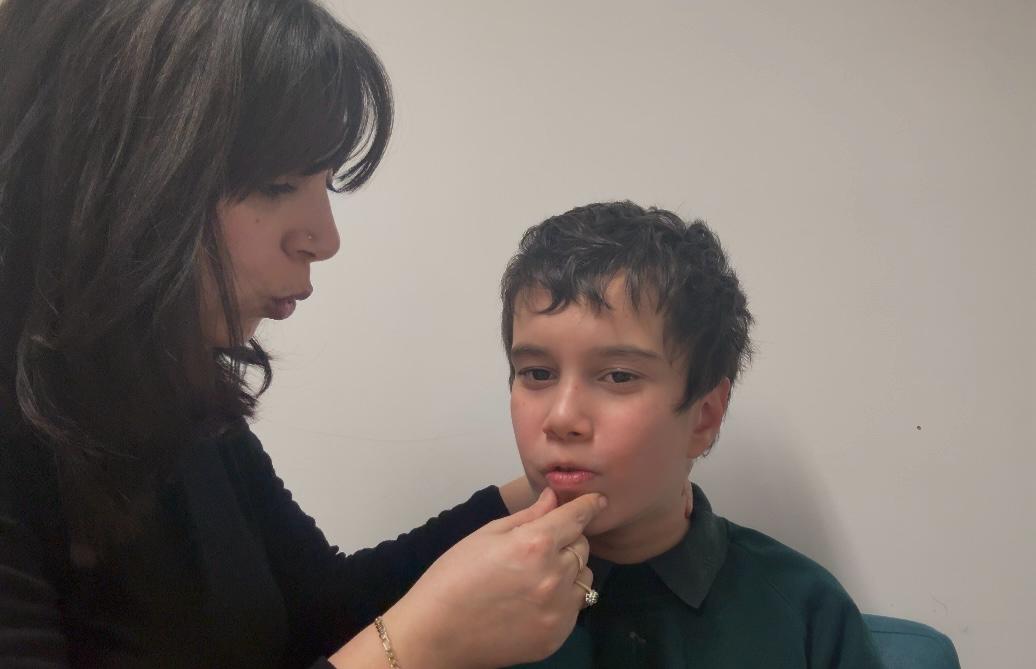
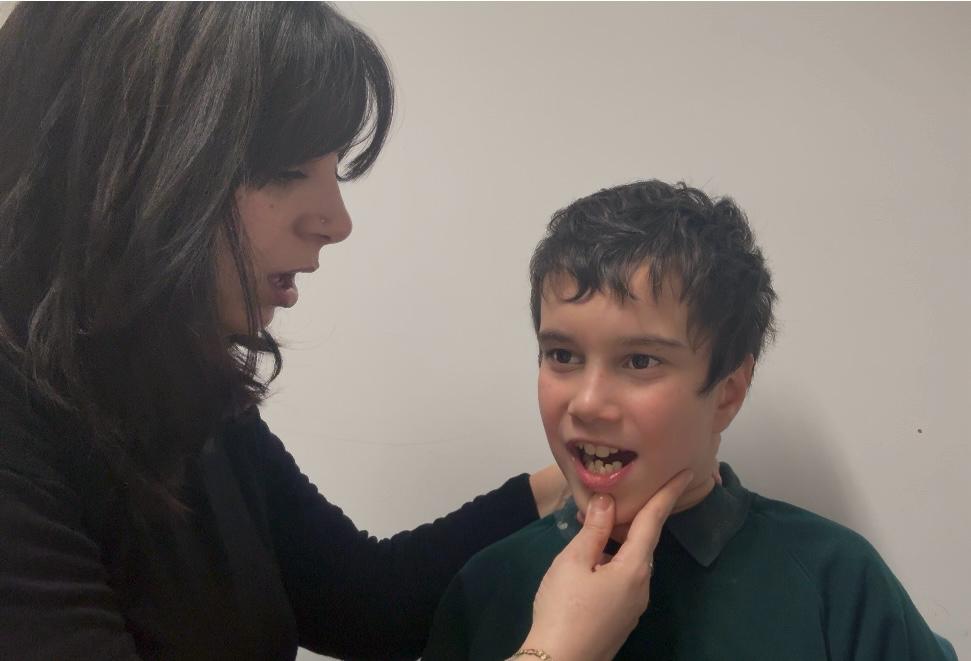
During therapy, tactile-kinesthetic cues (touch prompts) may be used to support accurate and
purposeful movement of the jaw, lips, and tongue for speech production. Targets may include
sounds, functional words, phrases, and sentences.
These carefully selected goals also support the development of expressive language and
increasingly effective social communication.
PROMPT Levels of training
The PROMPT Institute provides a structured pathway of professional training to ensure
therapists receive high-quality education, mentoring, and clinical support.
Level 1 Trained
The therapist has completed introductory training in the PROMPT Technique and can begin
applying foundational tactile prompting strategies to support motor-speech development.
They are also able to assess core speech-motor skills.
Level 2 Practicum Project
The therapist has completed the PROMPT Technique Practicum Project, demonstrating
deeper clinical application of the technique through supervised casework, practical
implementation, and advanced skill development.
Level 3 Bridging
The therapist has expanded their knowledge of the full PROMPT Approach and can design
more comprehensive intervention plans addressing motor-speech, cognitive-linguistic, and
social-emotional domains.
Level 4 Certified Clinician
A certified clinician has completed advanced mentoring and competency requirements,
demonstrating high-level clinical skill in the PROMPT Approach, System, and Technique,
alongside strong theoretical understanding.
Level 5 Instructor Level
PROMPT Instructors represent the highest level of training. They play a key role in
mentoring clinicians, supporting certification, delivering international training, and
contributing to ongoing research and professional development.
As a PROMPT Instructor, we provide advanced PROMPT therapy, mentoring, and
professional training to clinicians in the UK and internationally.